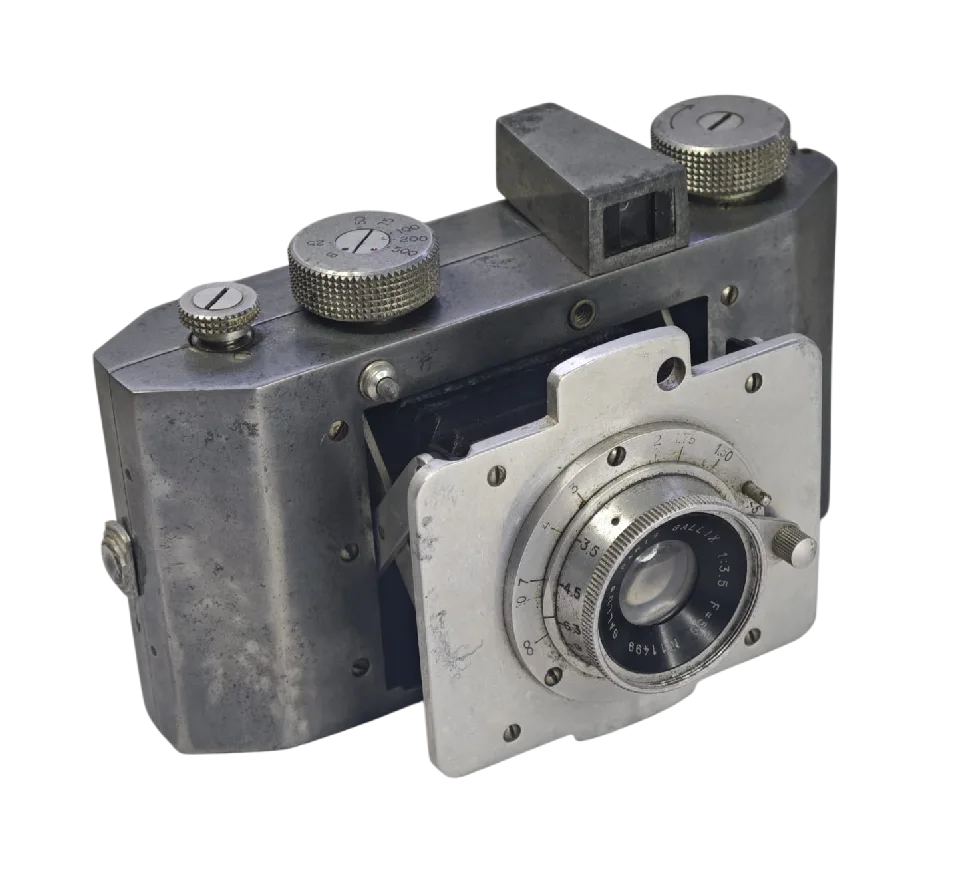
~1928/1952
Visor directo · Francia
Gallus
Gallus, cámara francesa fabricada en París entre los años 20 y los 50
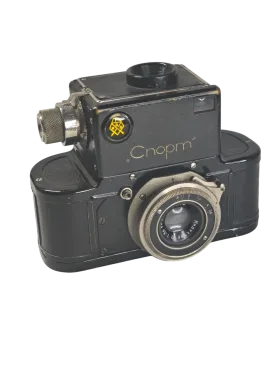 Classic SLRs
Mirror and prism. Canon AE-1, Nikon FE, Olympus OM, Pentax K1000 and the historic GOMZ Sport.
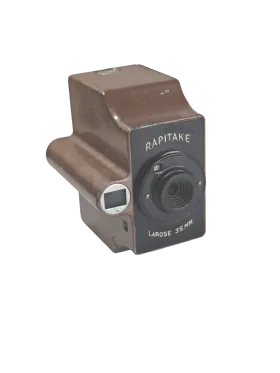 Compacts (point & shoot)
One body, fixed lens. From classic manuals to the Contax T3 and the Nikon Ti.
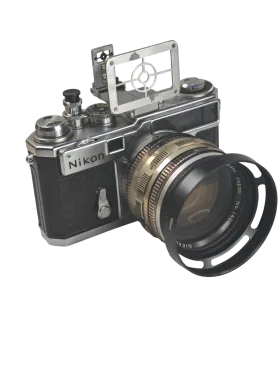 Rangefinders
Focusing by optical triangulation. Leica M, Yashica Electro, Zorki, Nikon SP.
 Accessories & oddities
Glass plates, Hasselblad medium format, Minox spy subminiatures, film.
One body, a fixed lens and nothing to configure. The quickest way into film, and also where the gap between a 40-euro camera and a 400-euro one is widest.
Catalogued compacts and direct-viewfinder cameras, from the simple mechanical ones to the high-end models.
The individual pages for each camera are written in Spanish.
Gallus, cámara francesa fabricada en París entre los años 20 y los 50
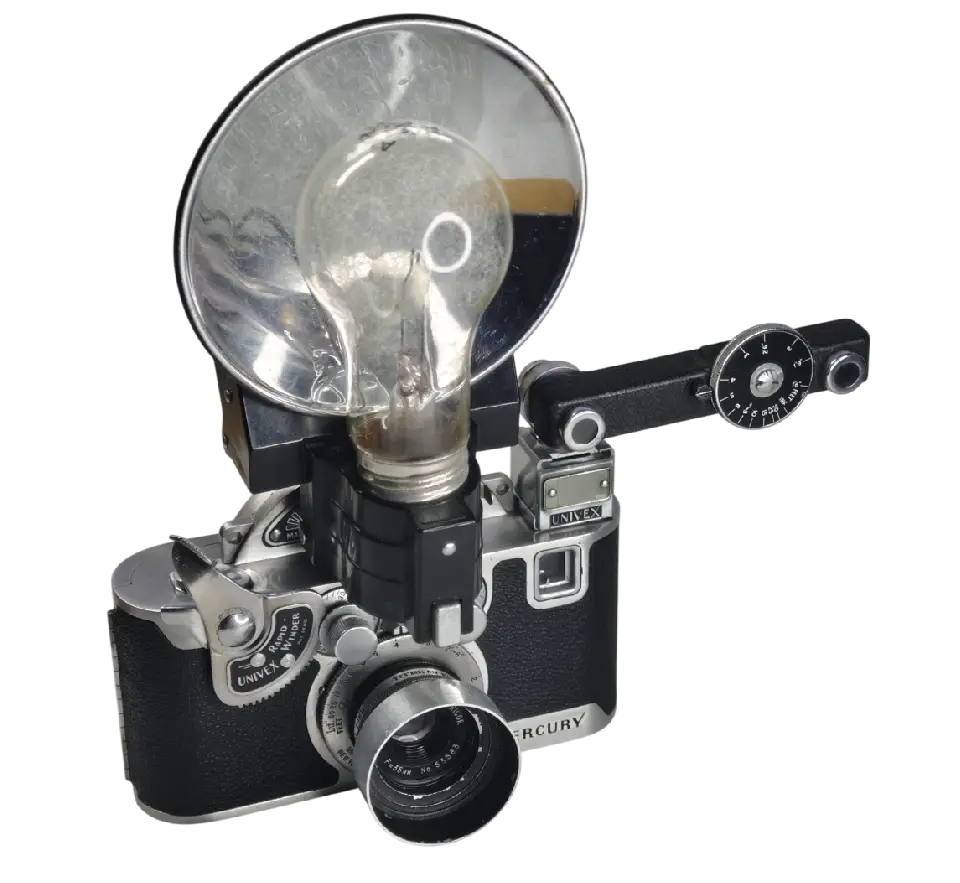
Mercury I, UniveX Mercury Model CC (1938)
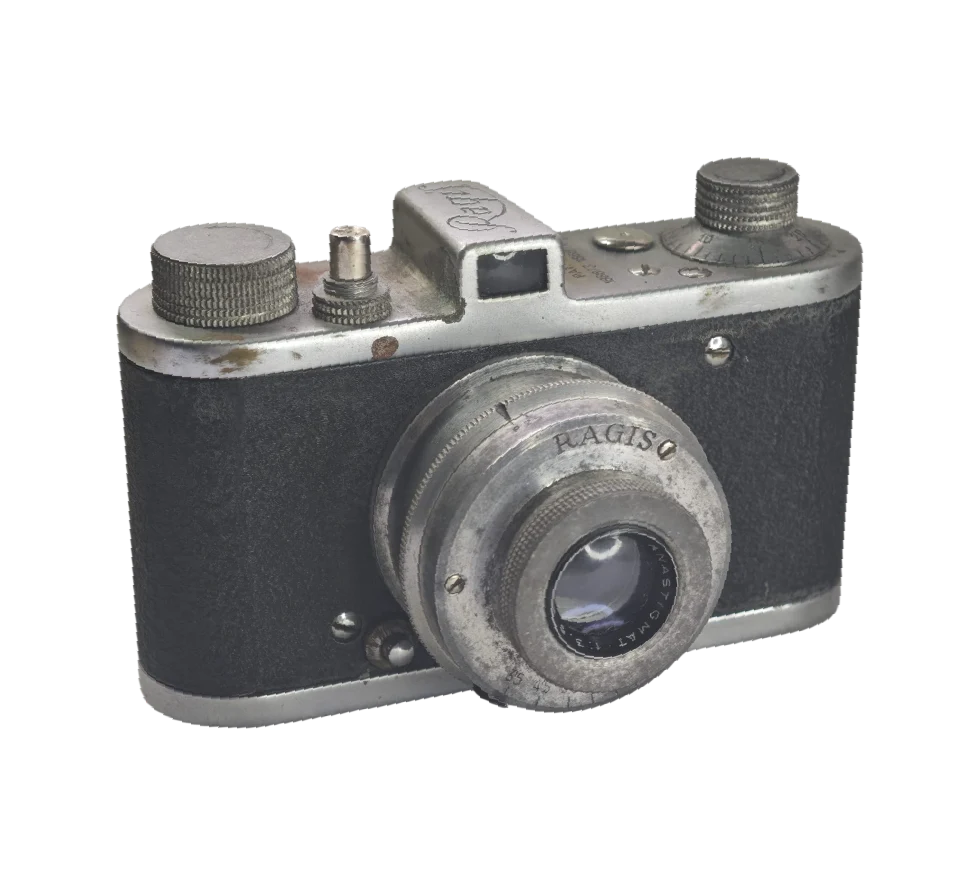
Ragis, La Leica de Barcelona, cámara telemétrica española fabricada por Regis c. 1947
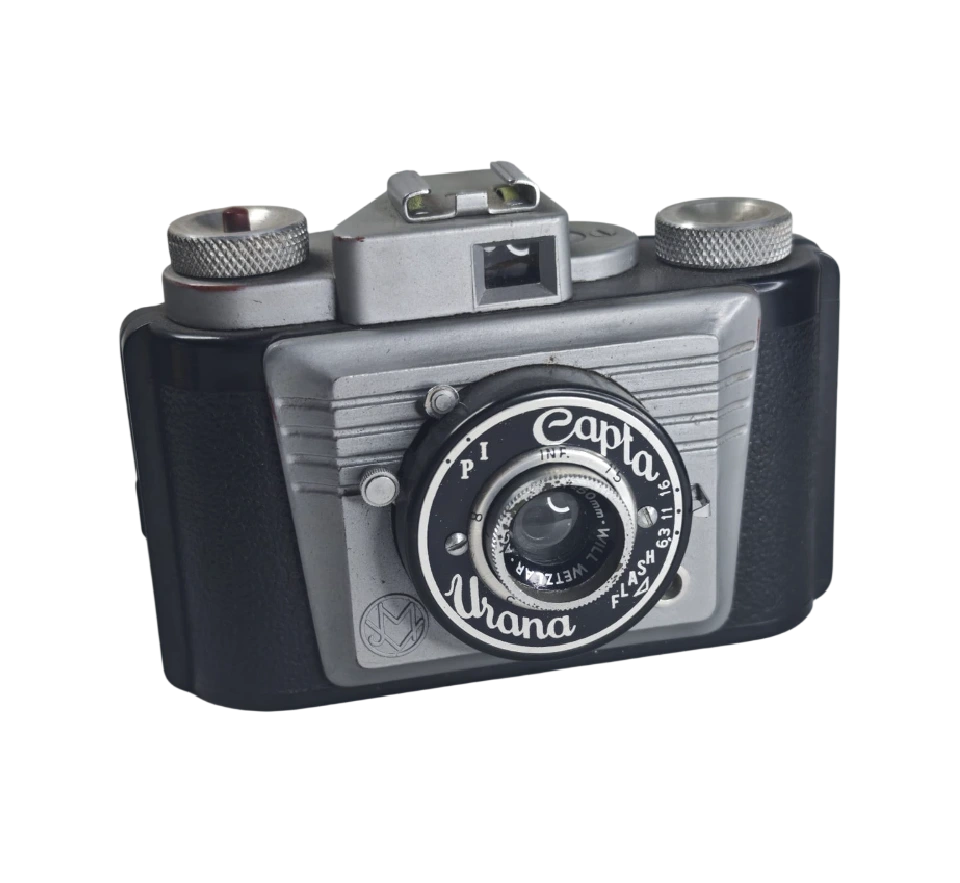
Capta Urana, cámara de baquelita fabricada por Industrias Matutano S.L. en Valencia, años 40-50
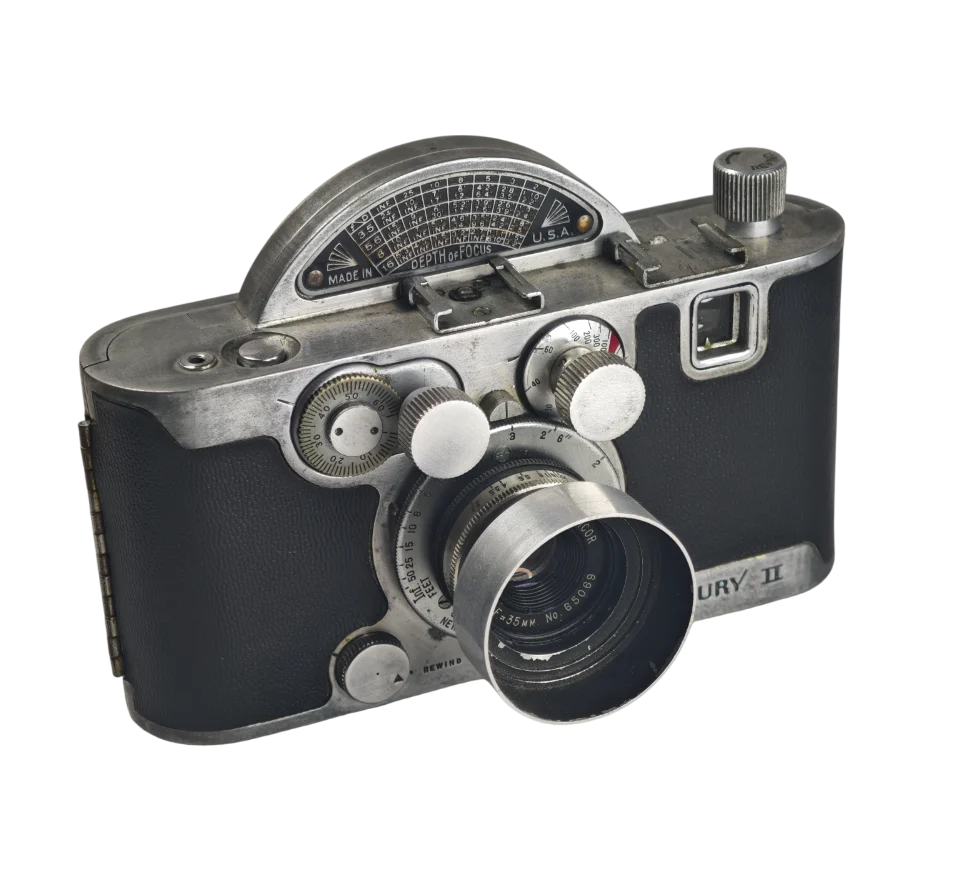
Mercury II (1945), cámara semiformato americana en la colección de Pol
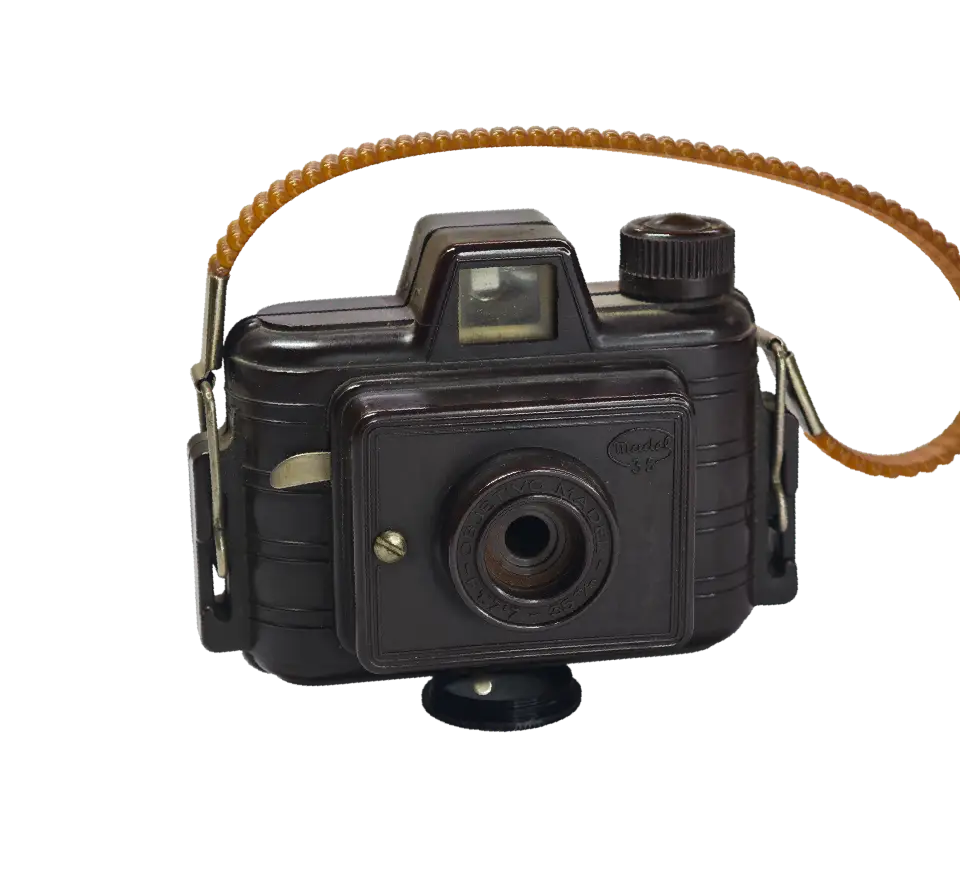
Madel 35 en rojo granate, cámara española de plástico de Industrias Plásticas MADEL, la misma empresa del Madelman
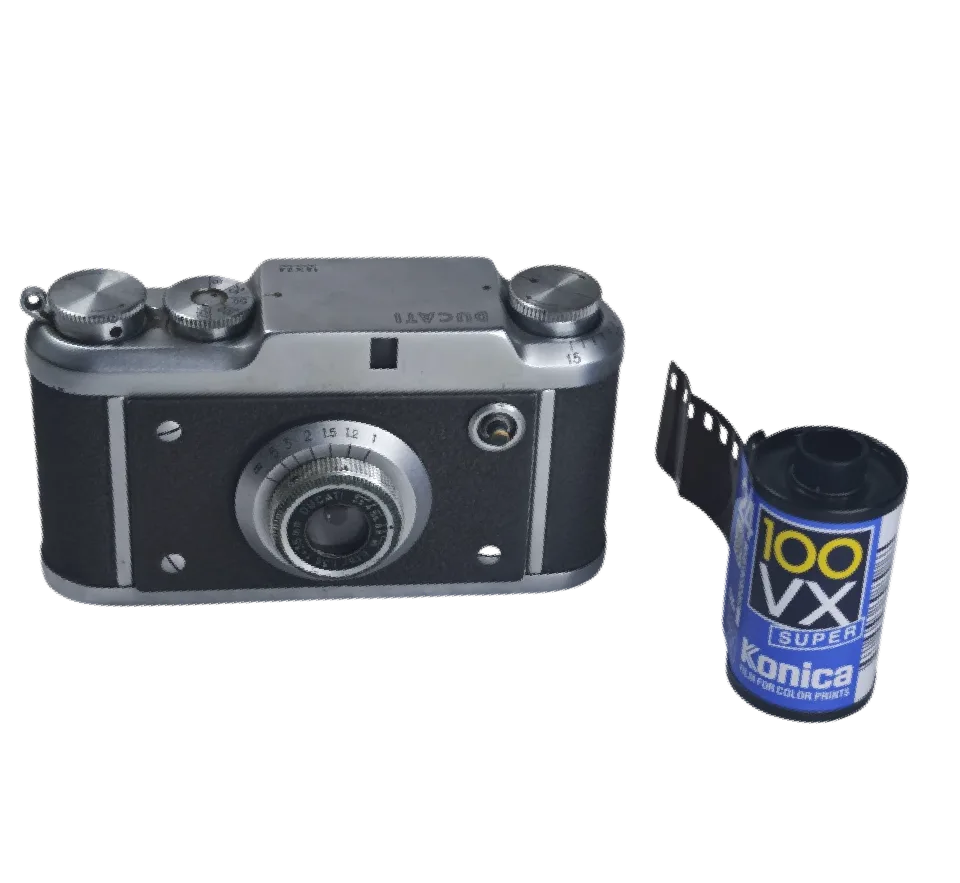
Ducati Simplex, microcámara de medio fotograma, Ducati Meccanica, Bolonia, años 50
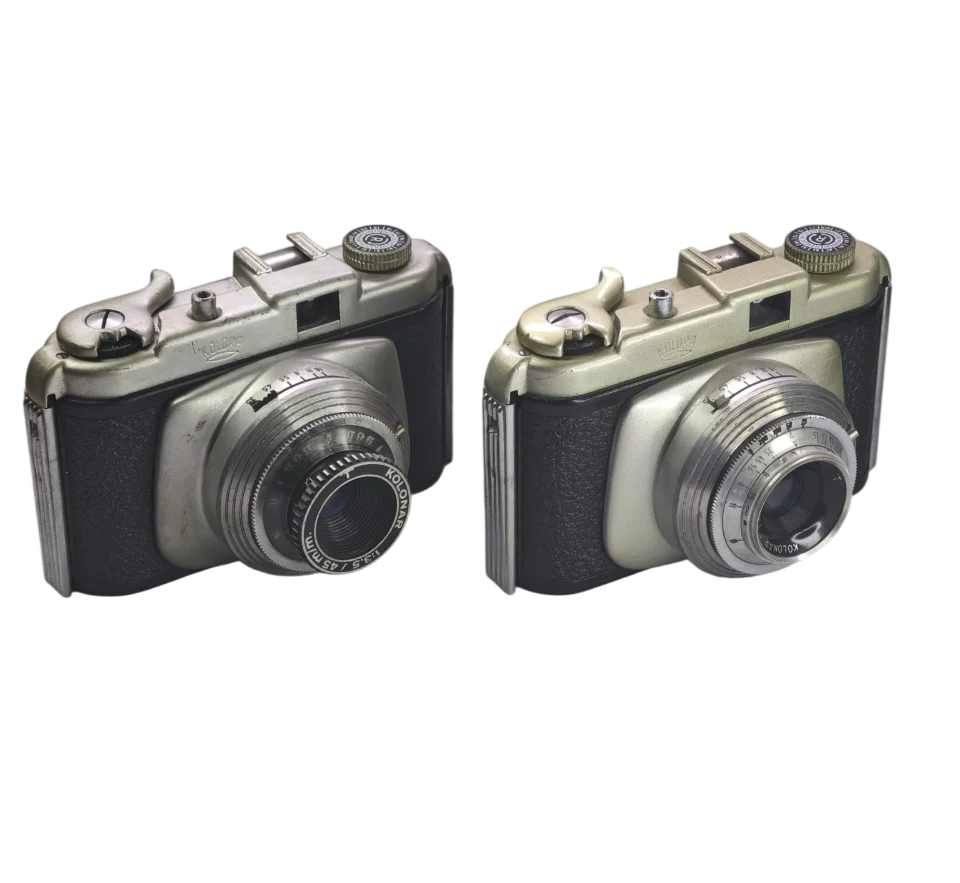
Kolora, cámara española 35mm de CINAMA (Cinematografía Amateur SA, Barcelona, 1959), solo ~100 unidades fabricadas
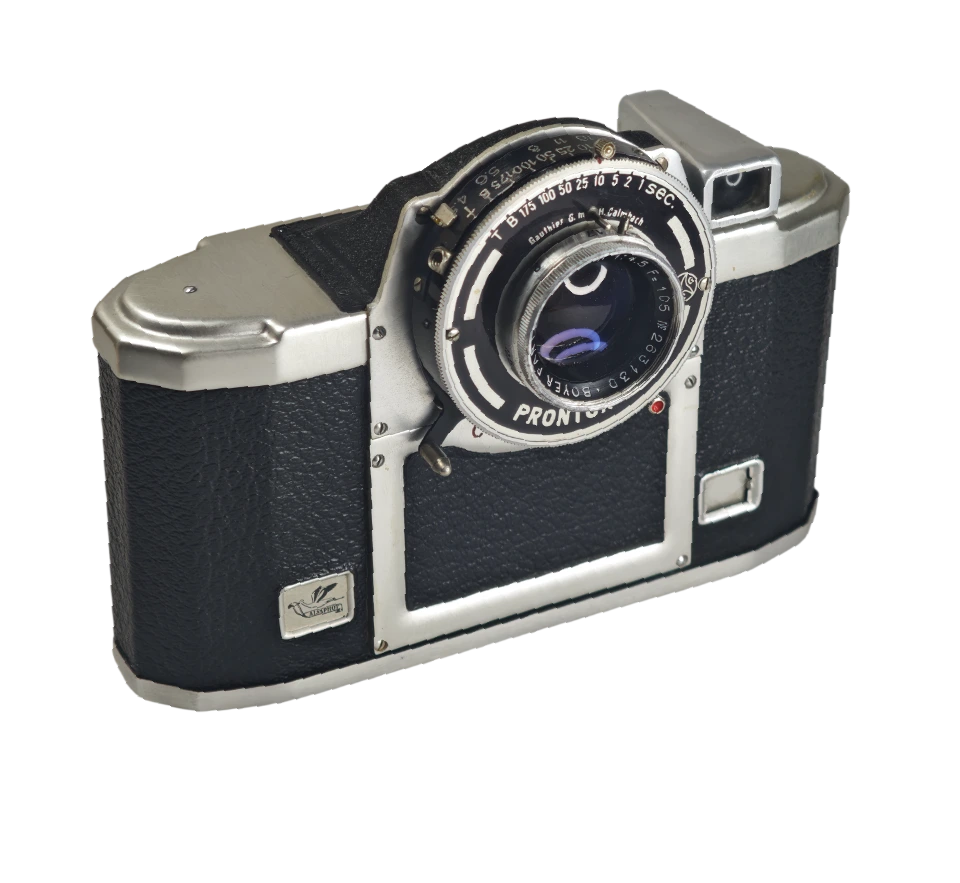
Cyclope Alsaphot, cámara francesa de diseño único en la colección de Pol
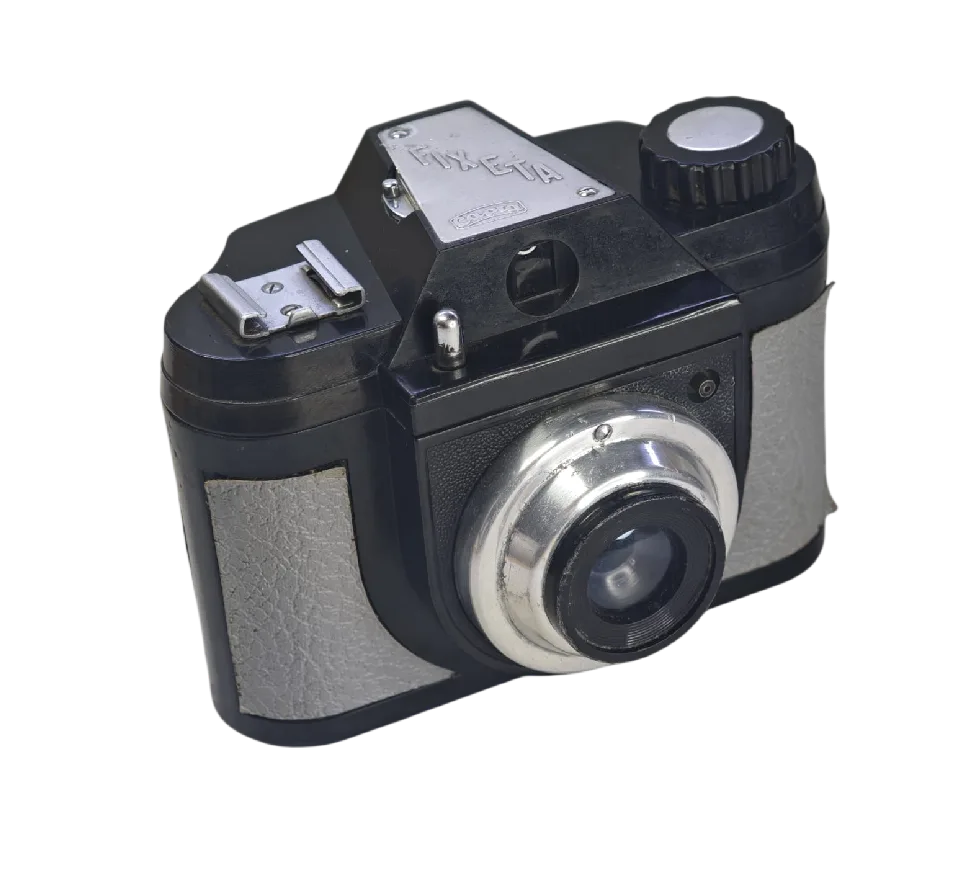
Capta Fixeta, cámara de baquelita negra fabricada por Industrias Matutano S.L. en 1963, formato 4×6,5 sobre película 120
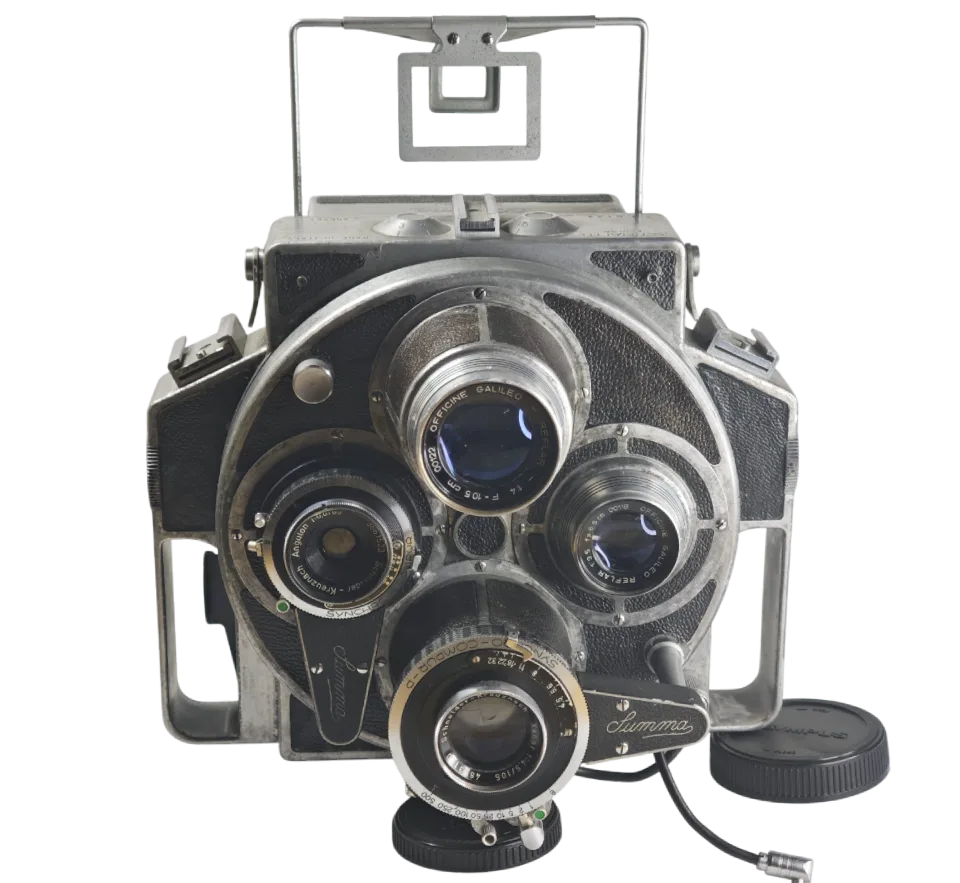
Summa Report, cámara de prensa italiana con torreta de lentes, Cesare Tiranti, Roma, c. 1955
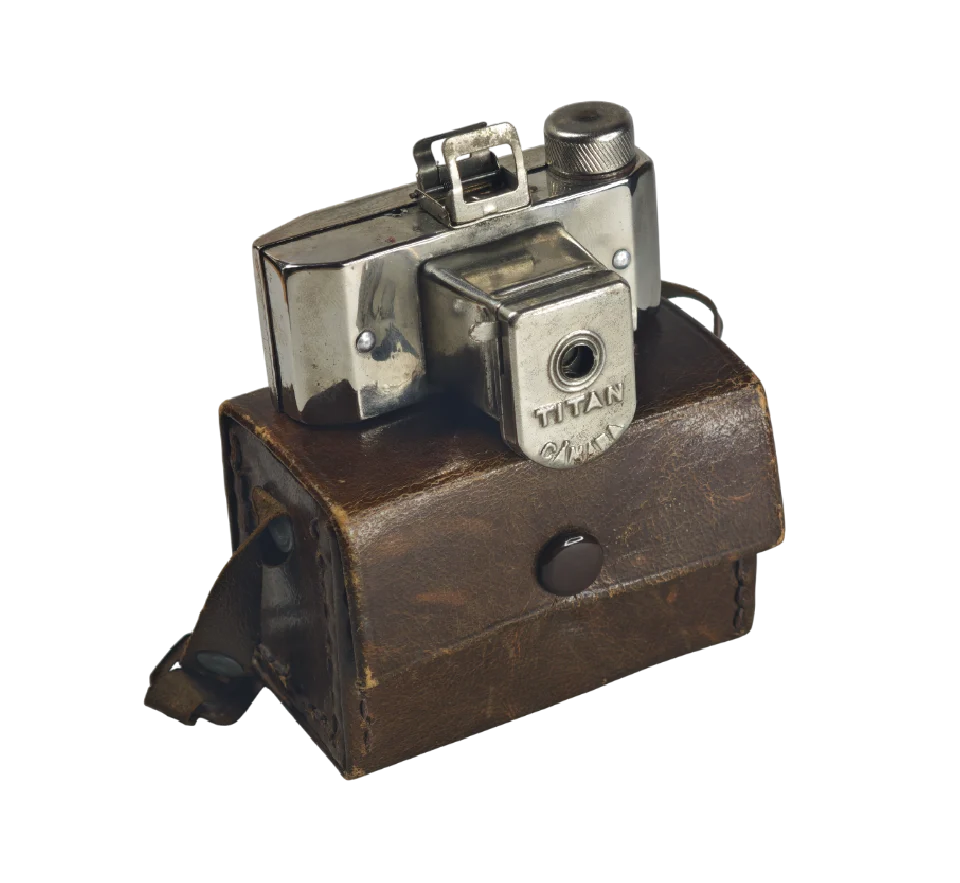
Titan, cámara miniatura española fabricada en Barcelona (1944–1950)
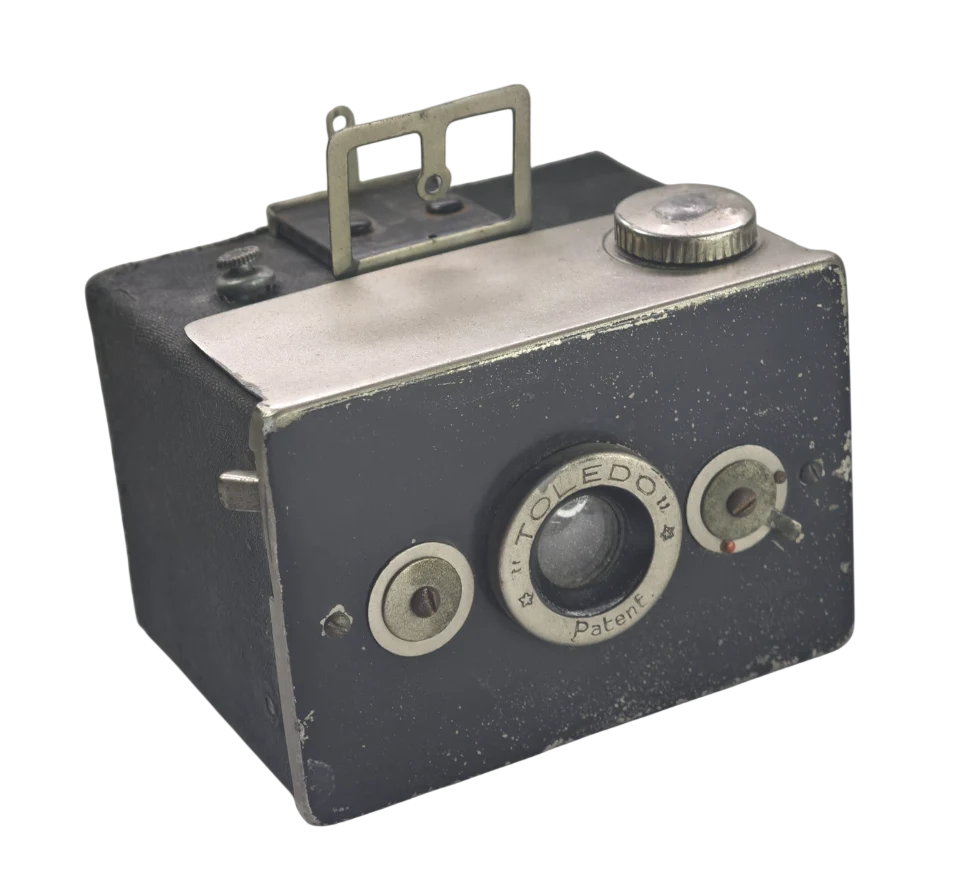
Toledo, cámara de cajón española de posguerra fabricada por Industrias Mafe en Valencia
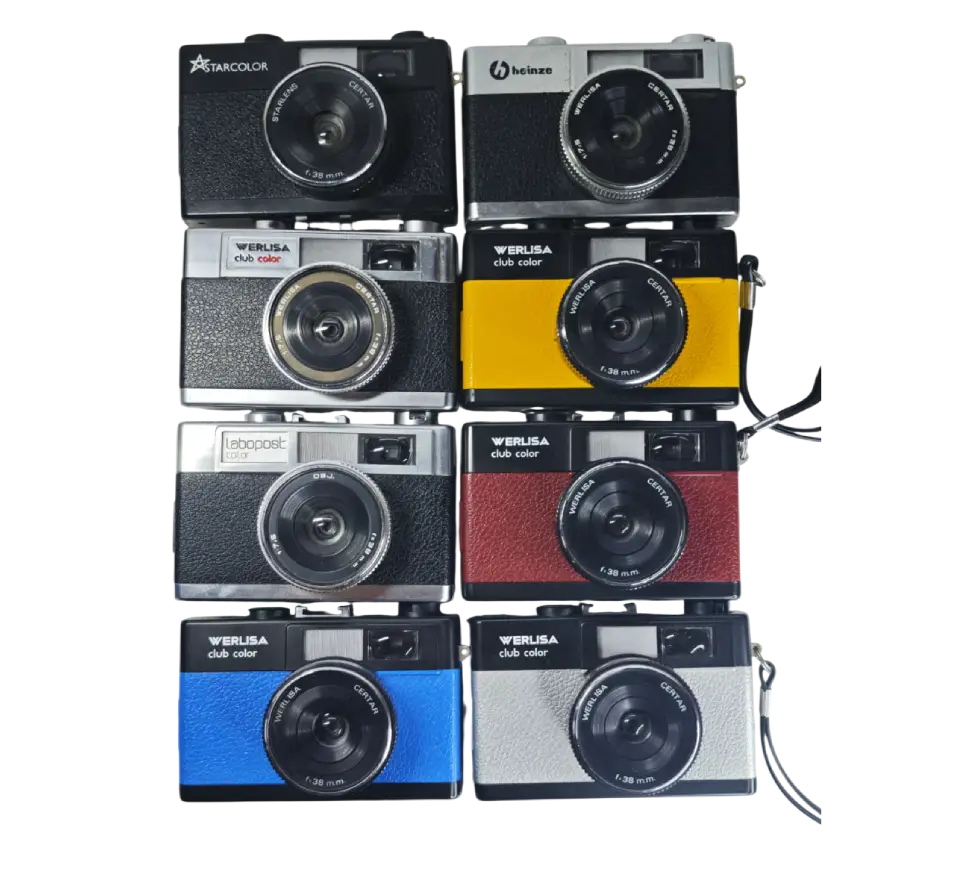
Werlisa Club Color, cámara compacta española de 35mm fabricada entre 1976 y 1985
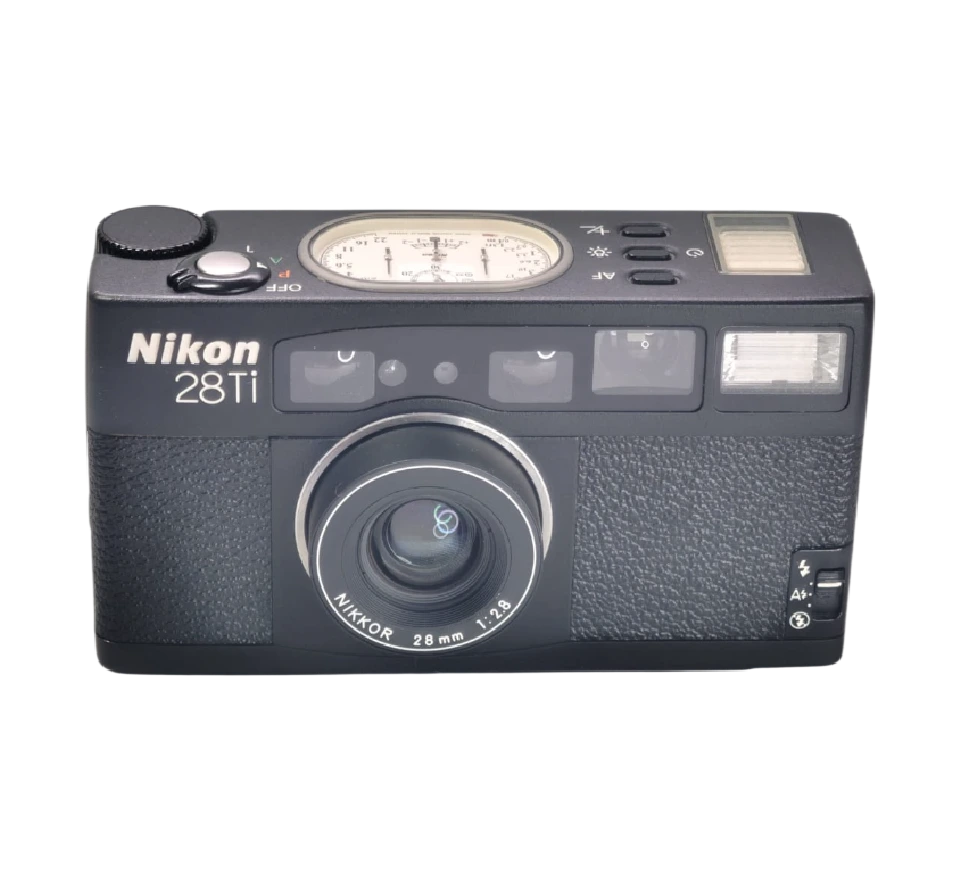
Nikon 28Ti, compacta de titanio con panel de agujas analógico, años 90
Essentially the lens and the automation. A 40-euro compact has a three-element lens, fixed focus and two or three exposure steps: it always shoots the same. A high-end 1990s model has a six-element lens, autofocus and real metering, which is why it costs ten times as much.
Yes, as long as you understand what it does. It focuses acceptably from about a metre and a half to infinity and no further. For street and holiday photography in good light it works very well; for close portraits or dim interiors it does not.
It depends. The mechanical bodies of the 1960s and 1970s fire without a battery; the flash, if there is one, does need power. Compacts from the 1980s and 1990s do not work without a battery, and there you must check the compartment has not leaked, because the corrosion eats the contacts and often cannot be fixed.
Because of how the images look: high contrast, saturated colour and vignetting, which is exactly what phone filters imitate. That has pushed the price of a few specific models far above what they are technically worth.
A simple, cheap mechanical one, to learn how to load a roll and how film behaves without risking much money. Once you know whether you enjoy the process, you can move up to better glass.
The pieces that leave the collection are published in the shop, with their graded condition and free shipping within Spain.
The collection is not for sale, but some pieces are. They are published with their history, their graded condition and photographs taken with that very camera.
Free shipping within Spain · 14 days to return it
