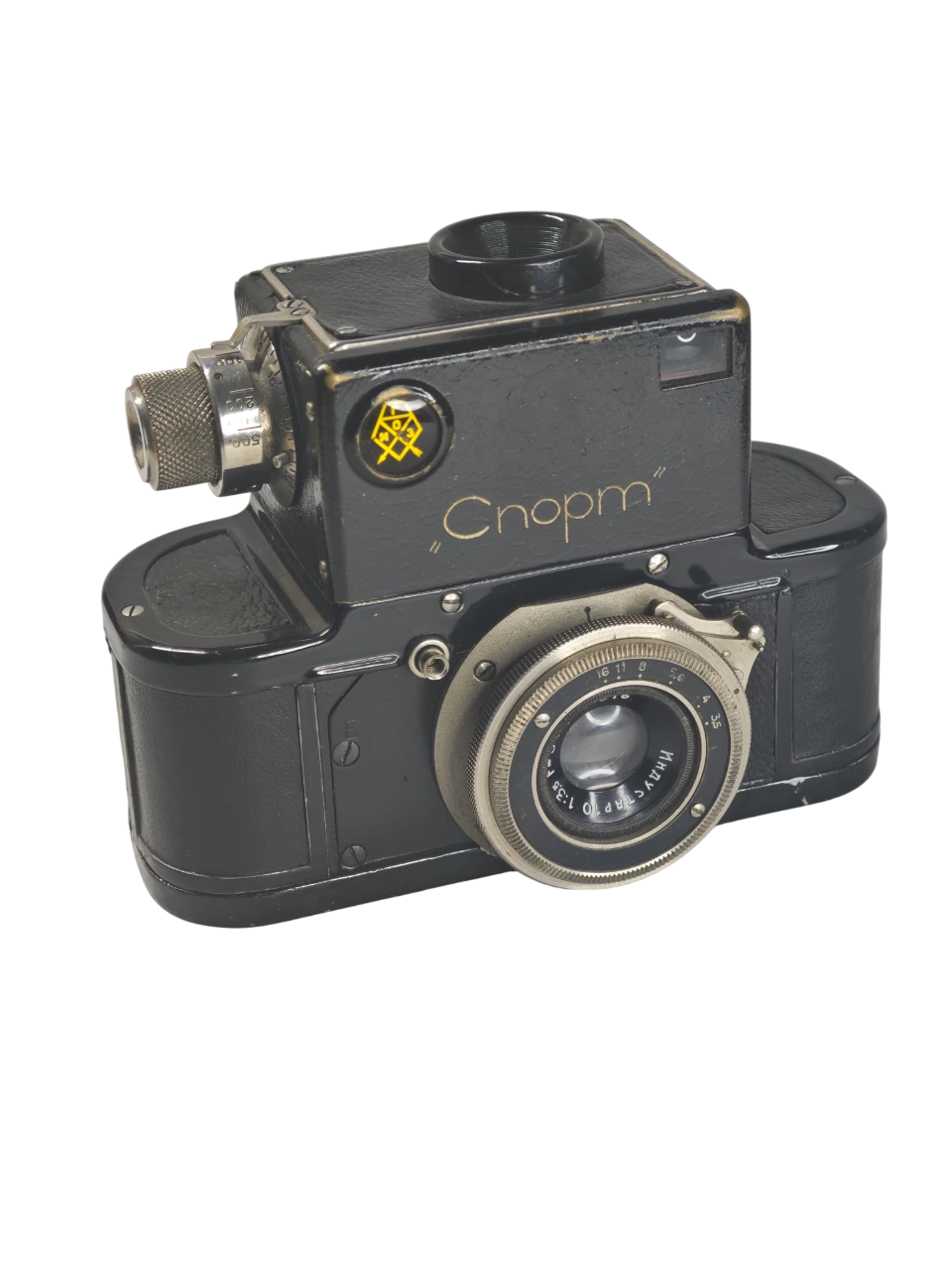
1936/1941
SLR · URSS
GOMZ Sport (1937)
GOMZ Sport (1937), la primera cámara réflex del mundo, en la colección de Pol
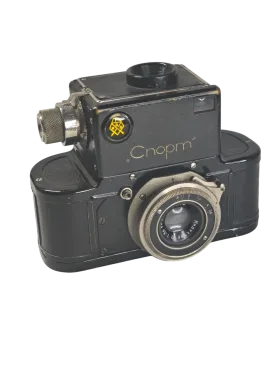 Classic SLRs
Mirror and prism. Canon AE-1, Nikon FE, Olympus OM, Pentax K1000 and the historic GOMZ Sport.
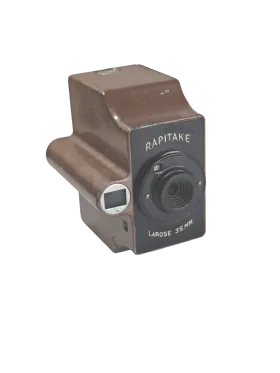 Compacts (point & shoot)
One body, fixed lens. From classic manuals to the Contax T3 and the Nikon Ti.
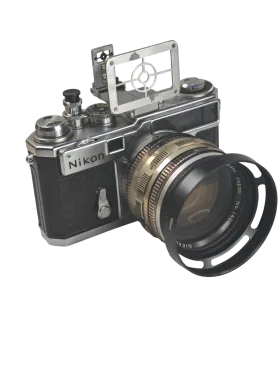 Rangefinders
Focusing by optical triangulation. Leica M, Yashica Electro, Zorki, Nikon SP.
 Accessories & oddities
Glass plates, Hasselblad medium format, Minox spy subminiatures, film.
The 35 mm SLRs in the collection, one by one: mechanical bodies to learn on, semi-automatics for everyday use and rarities to collect. With their mount, their year and what to check on each.
The catalogued SLRs. Each piece goes through an inspection protocol and is tested with a real roll of film before its page is published.
The individual pages for each camera are written in Spanish.
GOMZ Sport (1937), la primera cámara réflex del mundo, en la colección de Pol
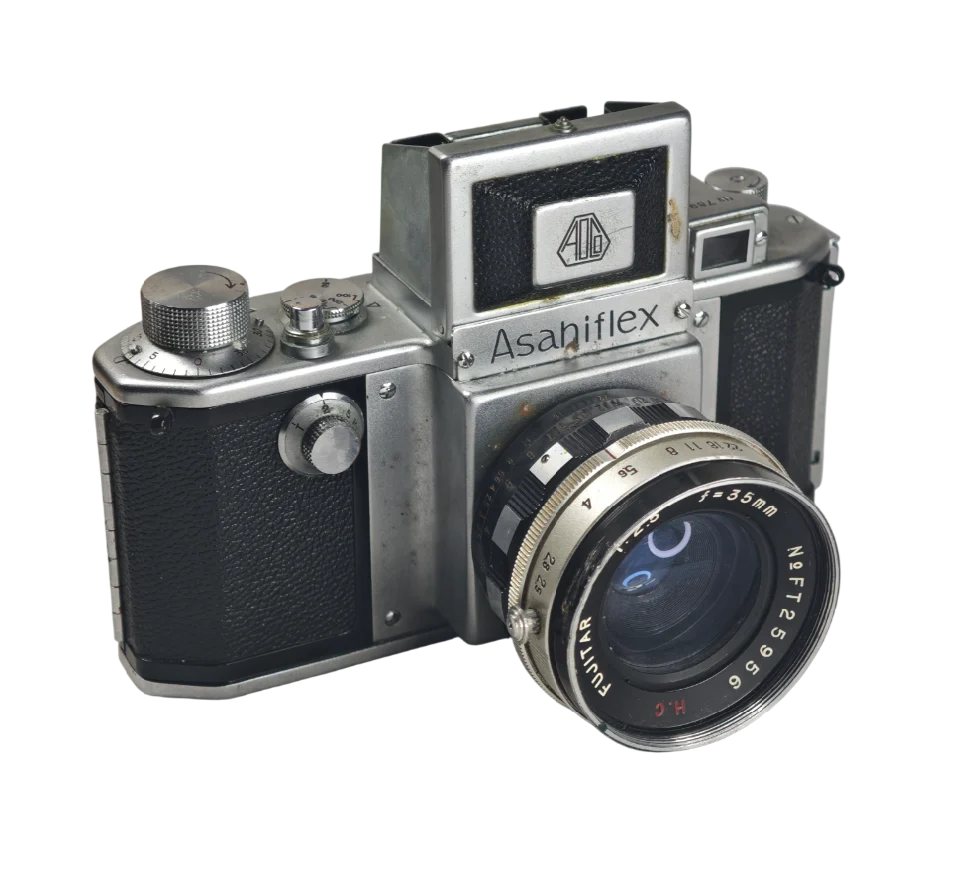
Asahiflex (1952), la primera réflex japonesa, precursora de Pentax, en la colección de Pol
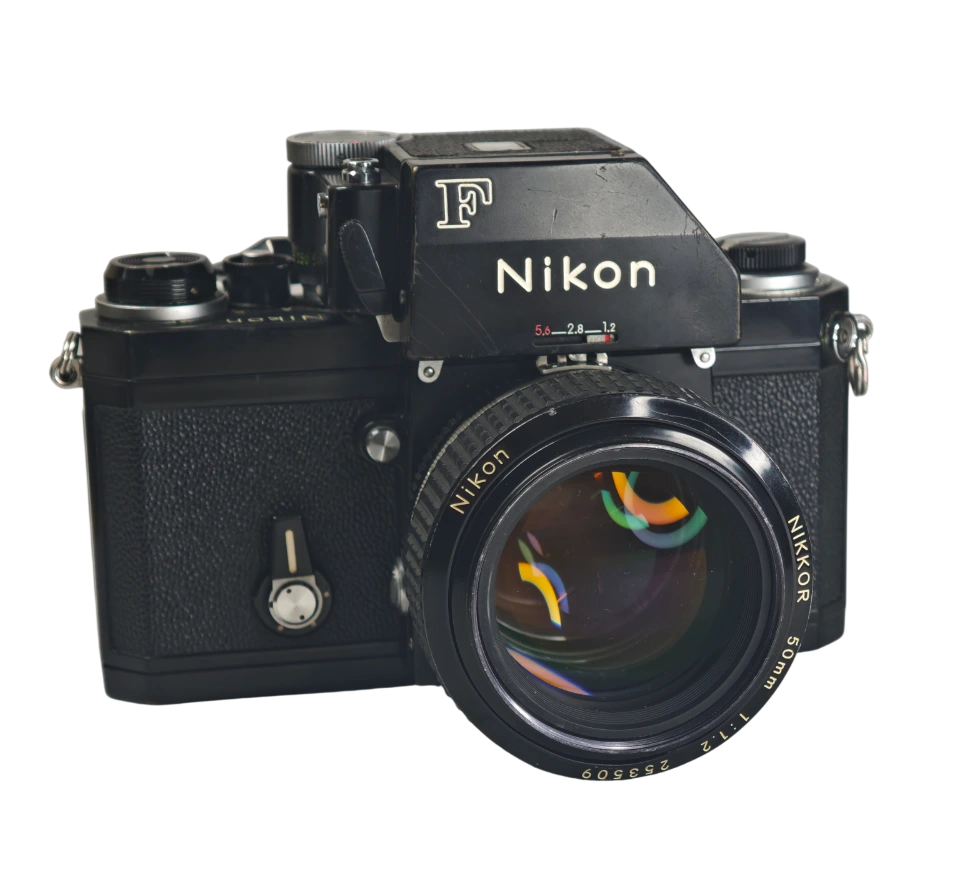
Nikon F con objetivo Nikkor 50mm f/1.2, réflex profesional de 1959
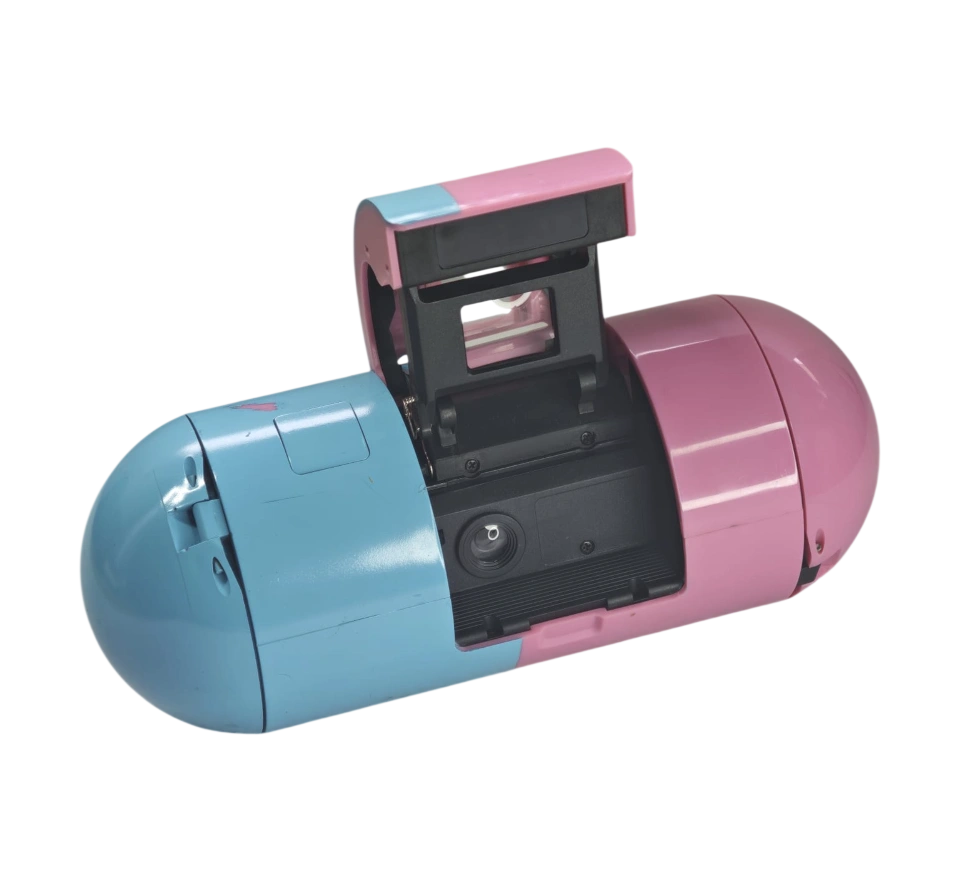
Spormadox, cámara promocional de 35mm con forma de cápsula farmacéutica, Laboratorios Dr. Esteve Barcelona
Canon AE-1, cámara analógica réflex 35mm de 1976 revisada
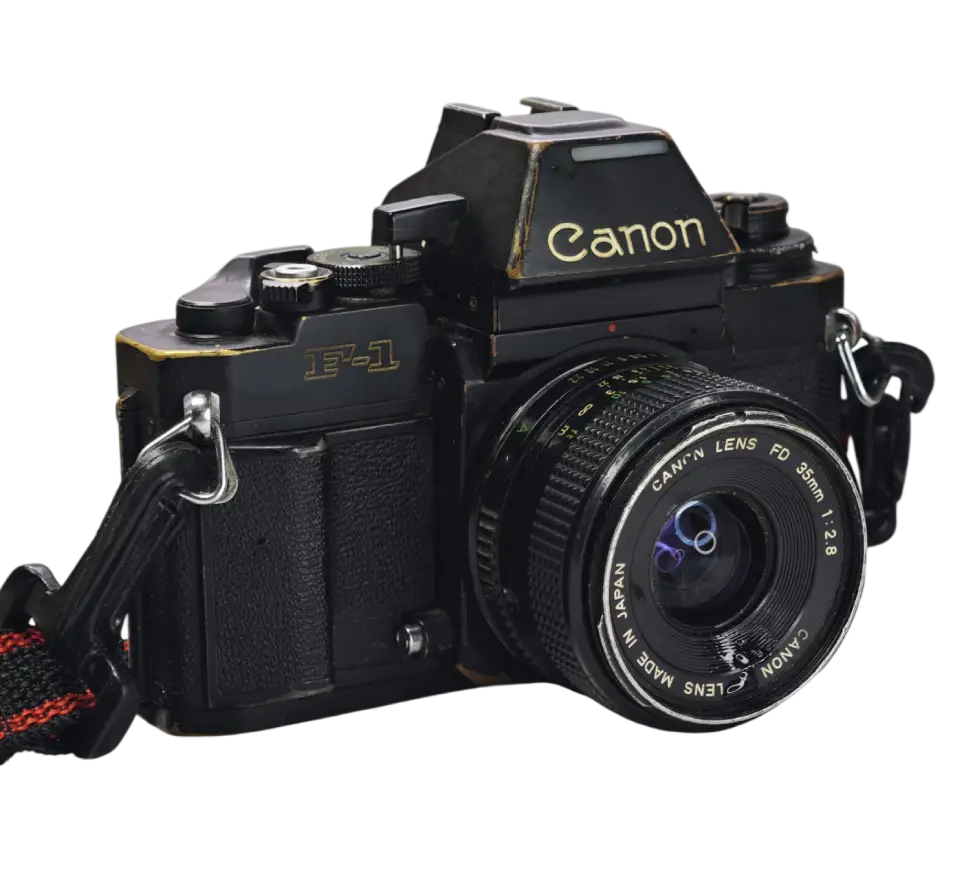
Canon F-1 negra con objetivo Canon FD 35mm f/2.8, réflex profesional japonesa en la colección de Pol
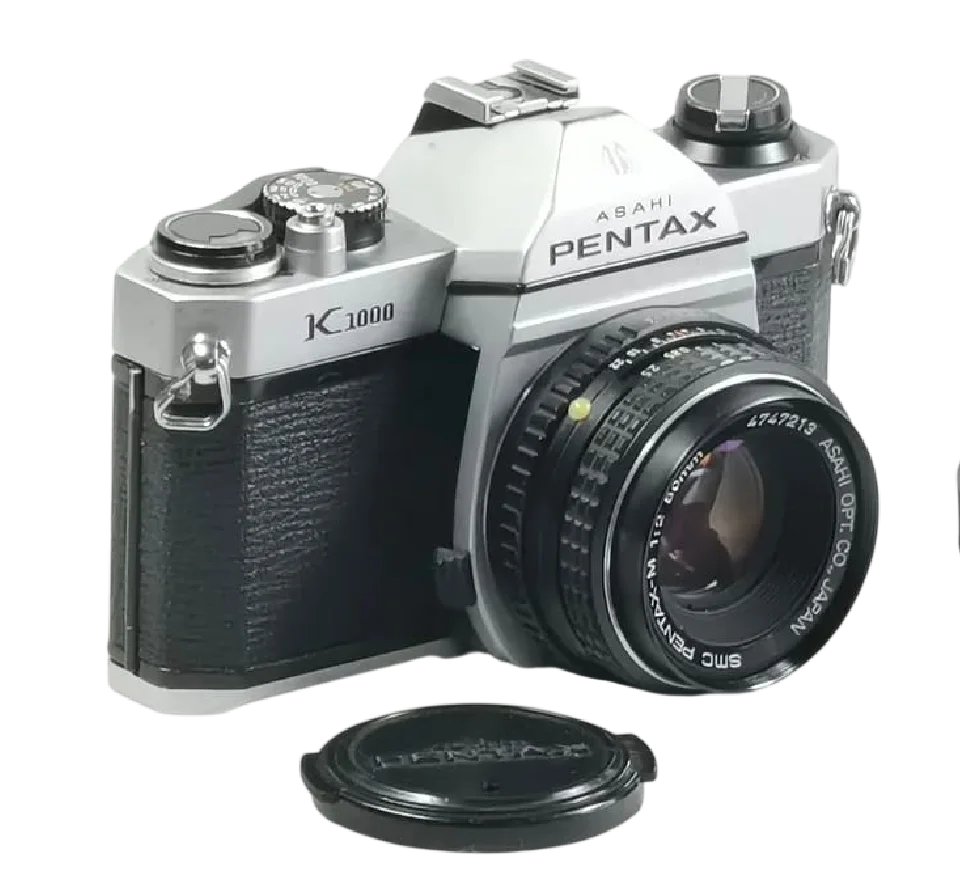
Pentax K1000, SLR totalmente mecánica, colección de Pol
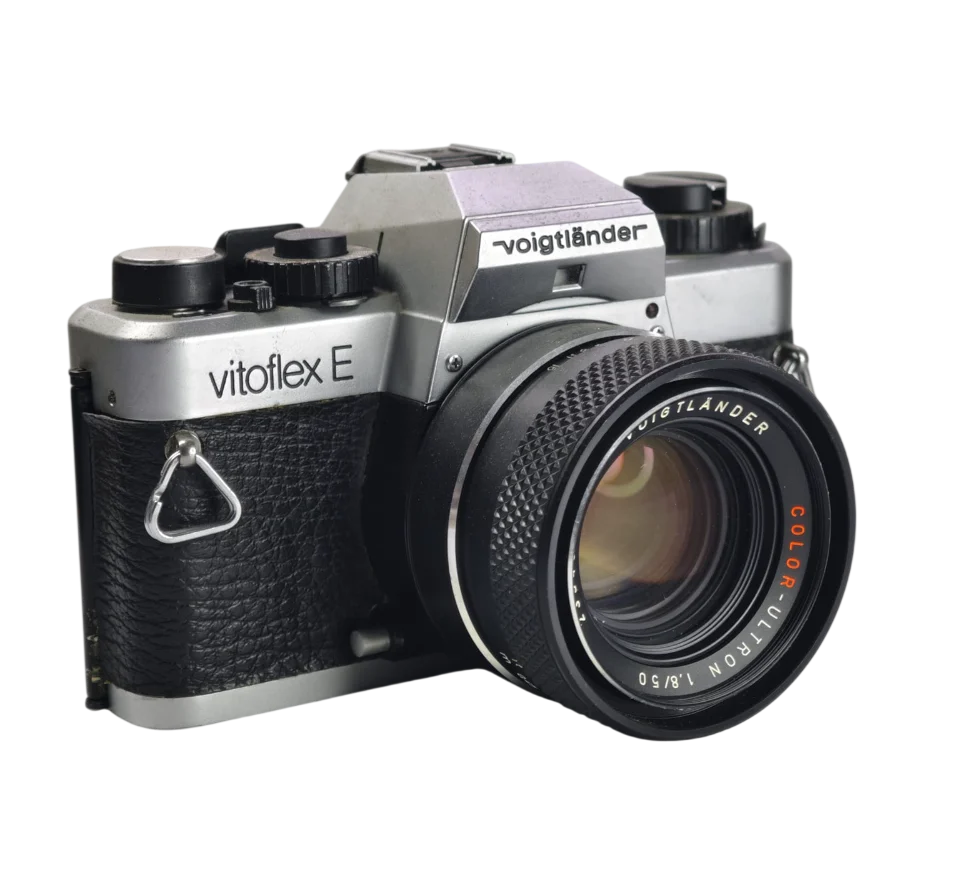
Voigtländer Vitoflex E, SLR fabricada por Rollei con Color-Ultron 50mm f/1.8
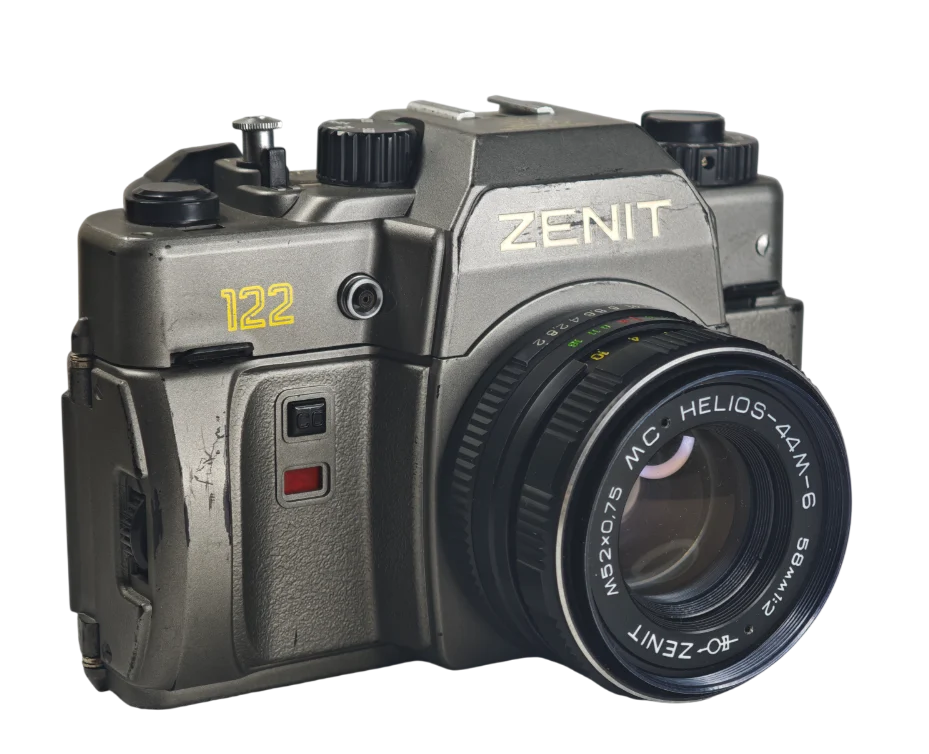
Zenit edición 50 aniversario, réflex soviética especial en la colección de Pol
SLR stands for single lens reflex: an angled mirror bounces the light from the lens up into the viewfinder, so you see exactly what will be photographed. A compact frames through a separate window, which is why at close distances what you see is not quite what you get.
A mechanical one with a simple meter: Pentax K1000, Canon AE-1, Nikon FE, or any Zenith if the budget is minimal. All of them have plentiful cheap lenses, and all of them force you to understand aperture and shutter speed, which is exactly what you want while learning.
The M42 screw mount is the cheapest and has the most German and Soviet glass available. Canon FD and Nikon F have a far bigger second-hand pool and better average quality. If you might move to digital one day, Nikon F is the only one that will let you reuse some of the glass.
In order: the light seals, which always perish and let light in; the slow shutter speeds, which stick; the meter, if it takes a mercury battery that is no longer made; and the mirror, which on some 1970s Canons comes unglued because the original adhesive ages.
If what you want is a quick picture, no. If what you want is the process (choosing the film, metering the light, waiting for the developing) and a result that cannot be reproduced with a filter, yes. They are two different things and they do not compete.
The pieces that leave the collection are published in the shop, with their graded condition and free shipping within Spain.
The collection is not for sale, but some pieces are. They are published with their history, their graded condition and photographs taken with that very camera.
Free shipping within Spain · 14 days to return it
