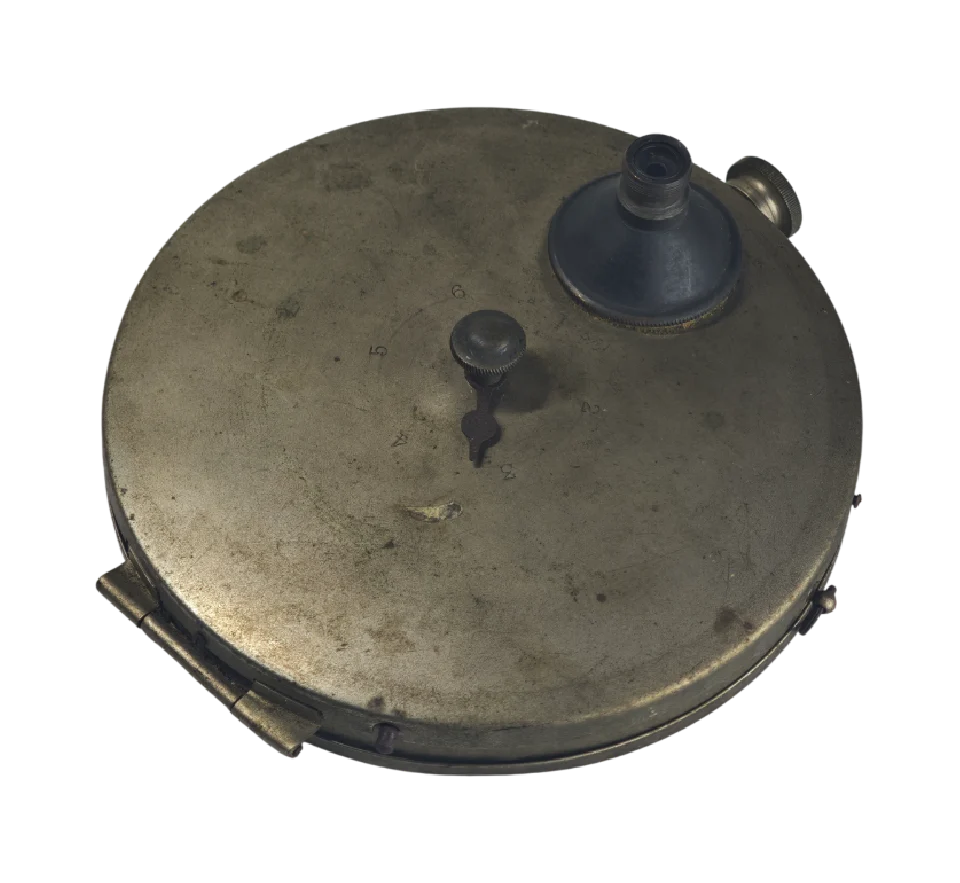
1886/1900
Espía · Alemania
Cámara Espía Stirn (XIX)
Cámara espía Stirn del siglo XIX, camuflada en chaqueta, en la colección de Pol
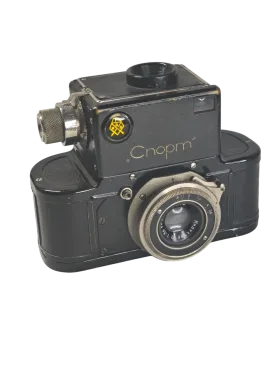 Classic SLRs
Mirror and prism. Canon AE-1, Nikon FE, Olympus OM, Pentax K1000 and the historic GOMZ Sport.
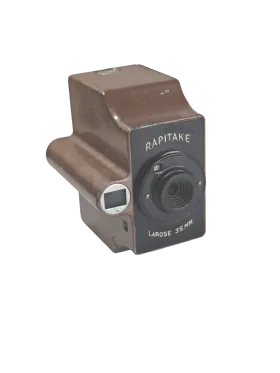 Compacts (point & shoot)
One body, fixed lens. From classic manuals to the Contax T3 and the Nikon Ti.
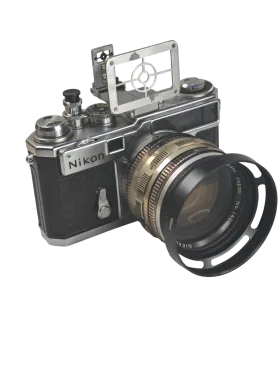 Rangefinders
Focusing by optical triangulation. Leica M, Yashica Electro, Zorki, Nikon SP.
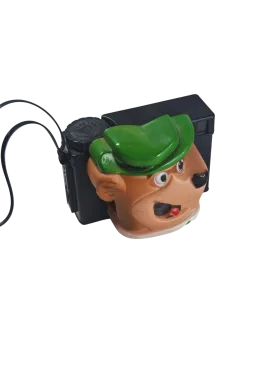 Accessories & oddities
Glass plates, Hasselblad medium format, Minox spy subminiatures, film.
What to check before you pay, what it really costs and which camera suits what you actually want to do. Written by someone who has opened a few hundred of them.
A selection of the catalogued pieces. Each one goes through an inspection protocol and is tested with a real roll of film before its page is published.
The individual pages for each camera are written in Spanish.
Cámara espía Stirn del siglo XIX, camuflada en chaqueta, en la colección de Pol
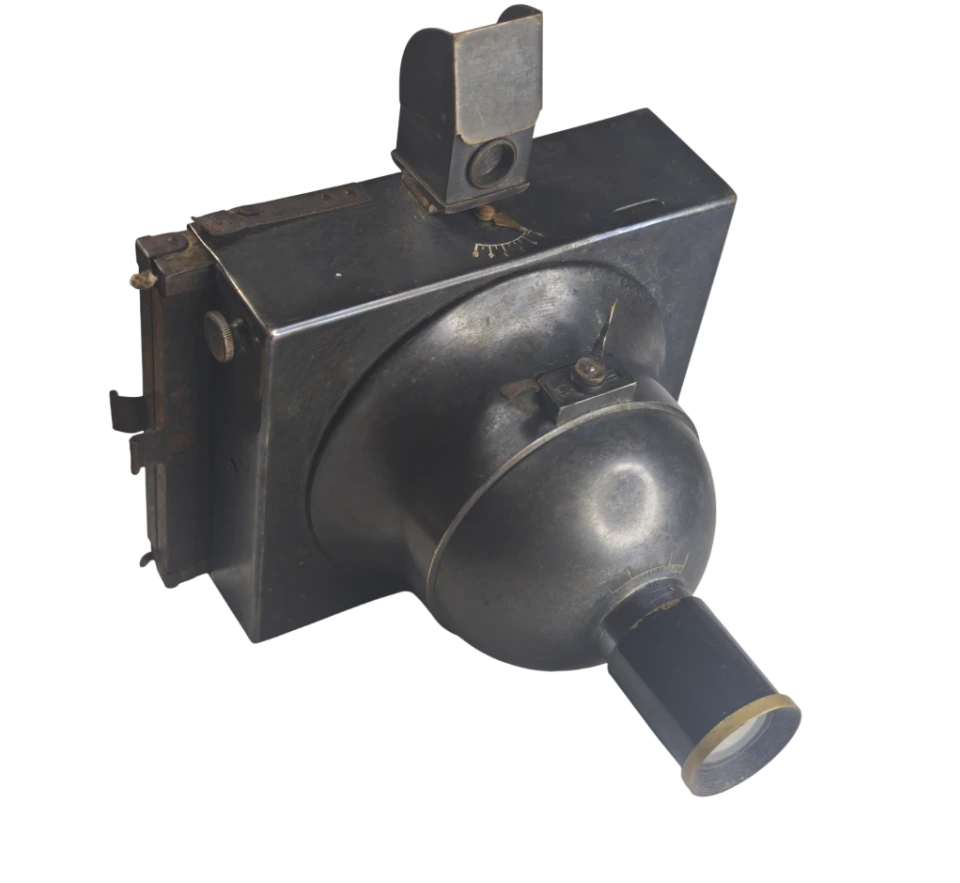
Photosphere (1888), la cámara esférica más antigua de la colección de Pol
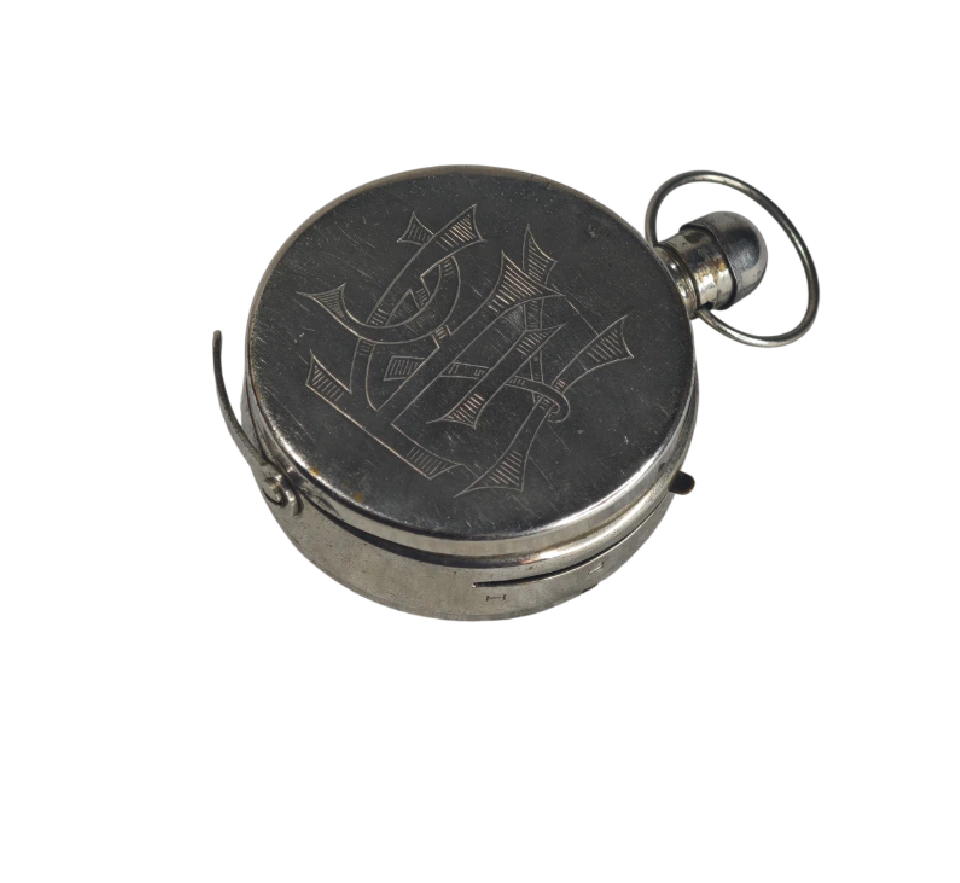
Ticka (1905), la cámara disfrazada de reloj de bolsillo en la colección de Pol
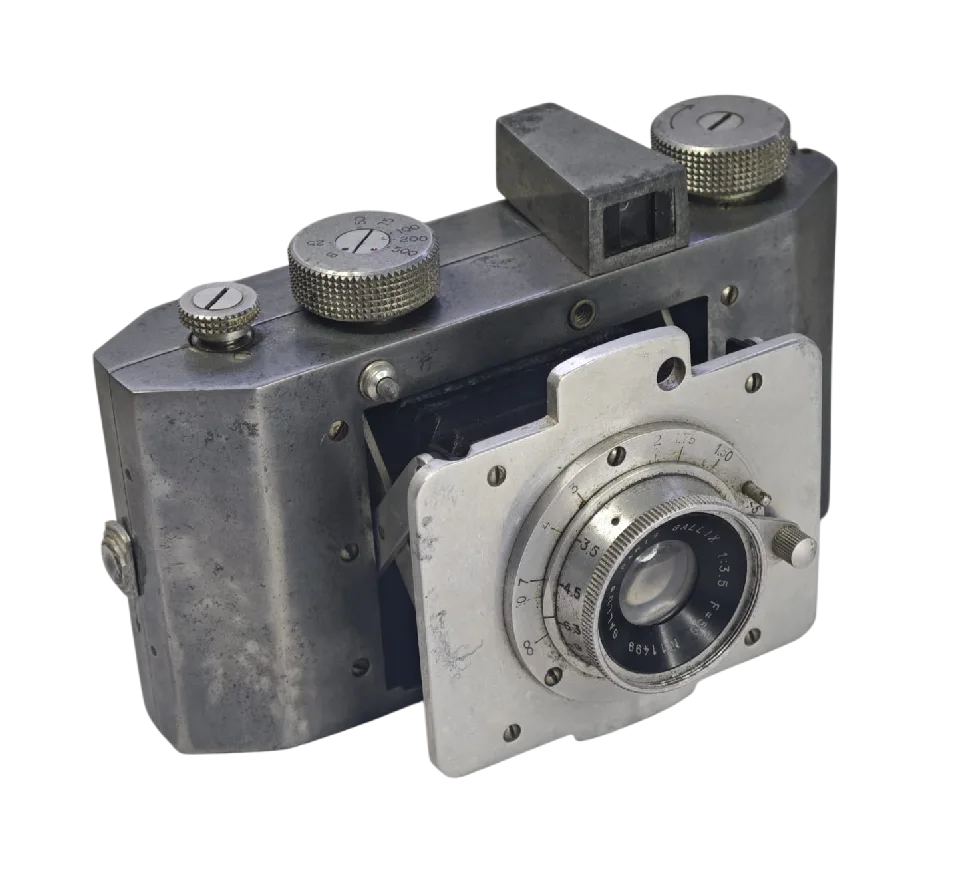
Gallus, cámara francesa fabricada en París entre los años 20 y los 50
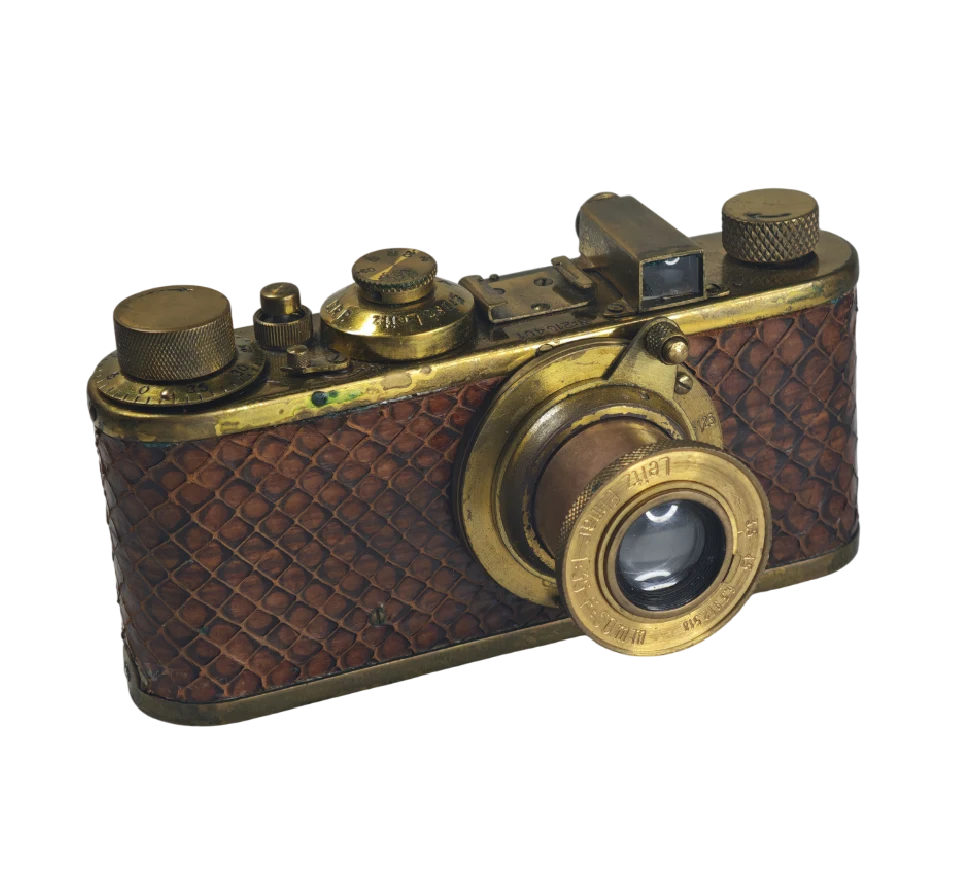
Copia Leica FED 1, primera copia soviética de la Leica, en la colección de Pol
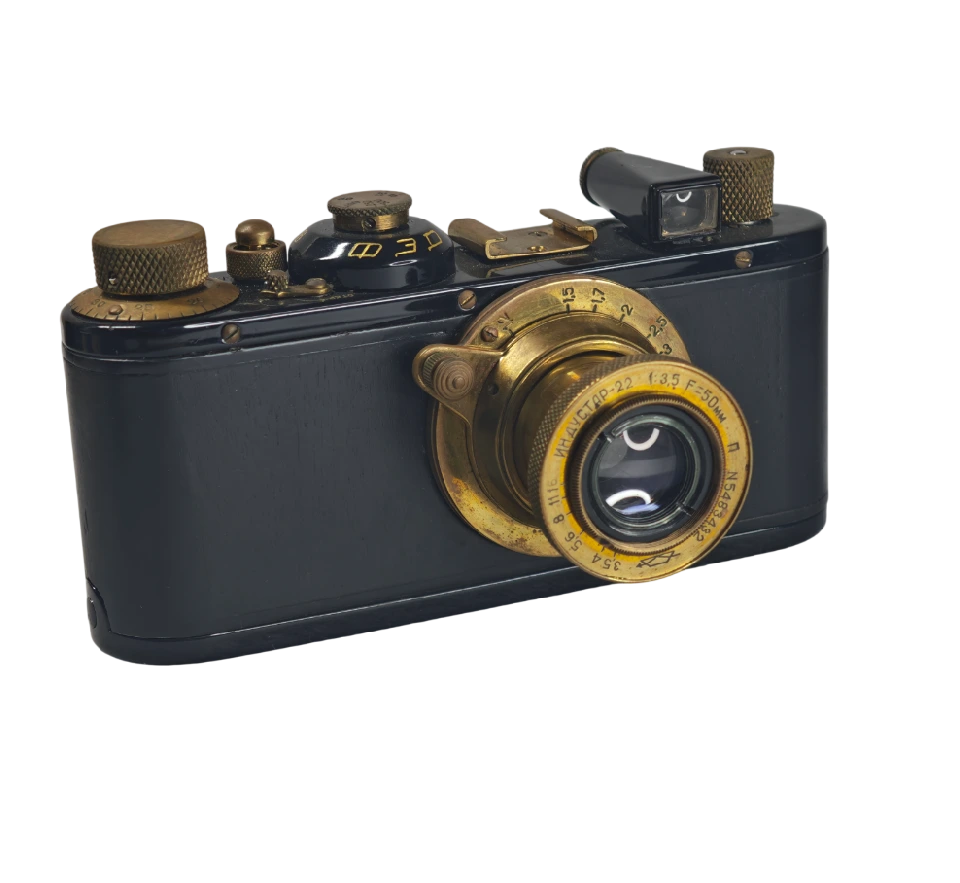
FED 1, primera copia soviética de la Leica en la colección de Pol
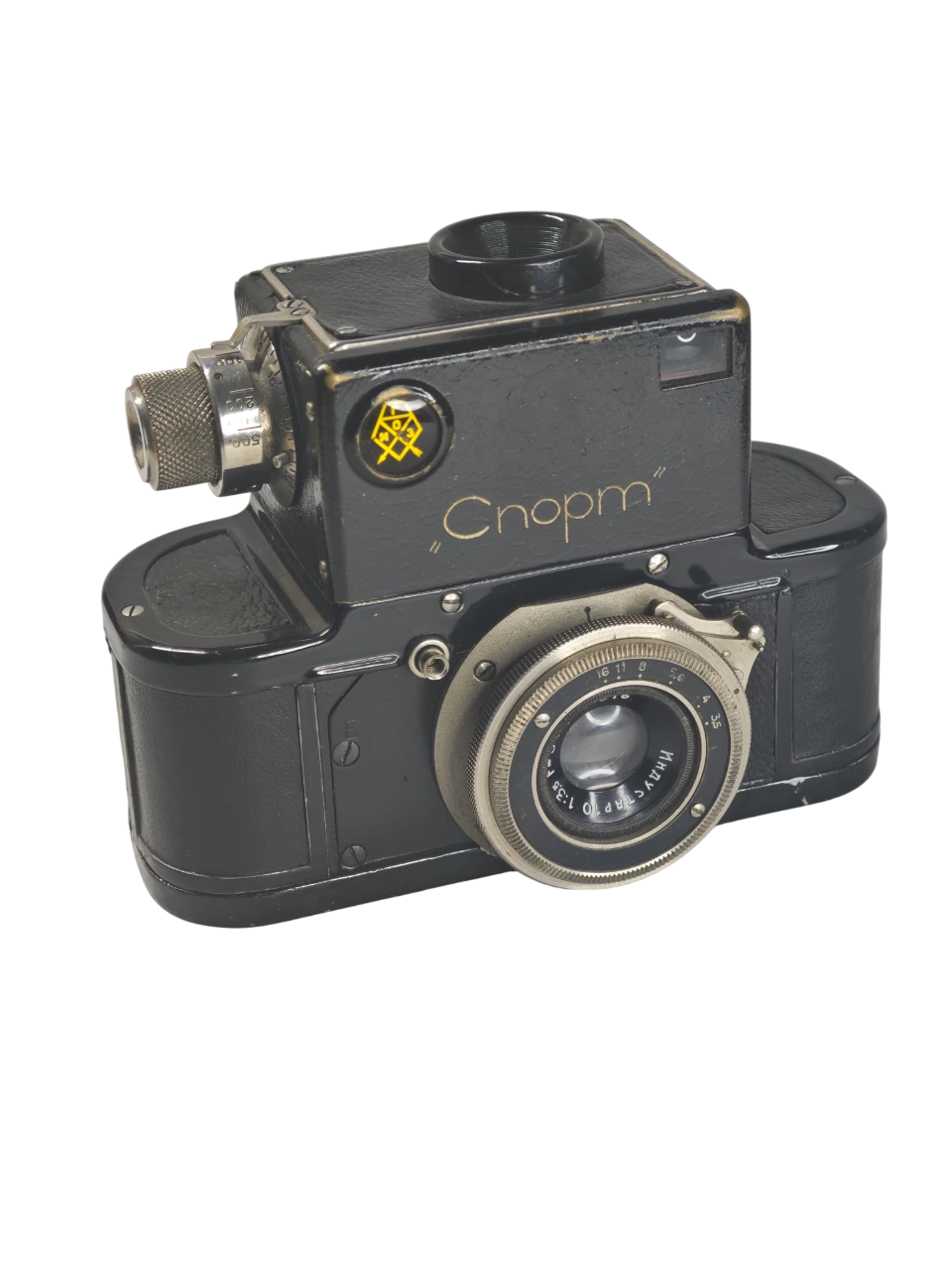
GOMZ Sport (1937), la primera cámara réflex del mundo, en la colección de Pol
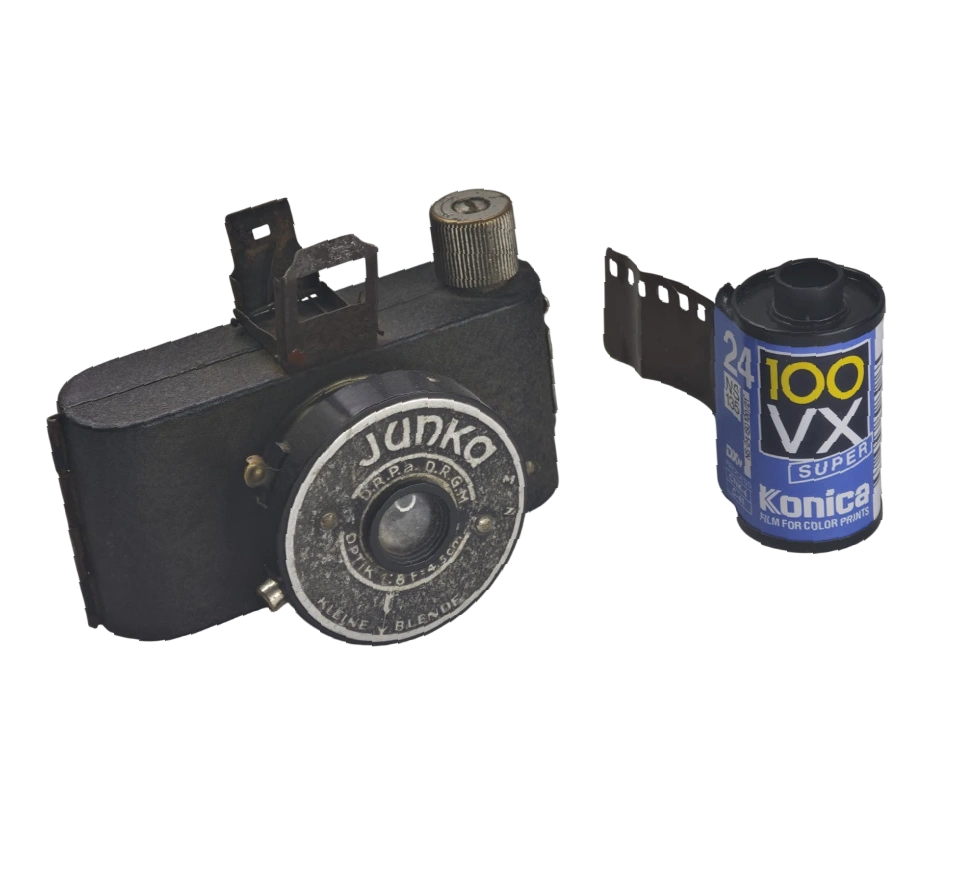
Junka, cámara alemana de baquelita Art Déco de entreguerras, Junka-Werk Núremberg 1937
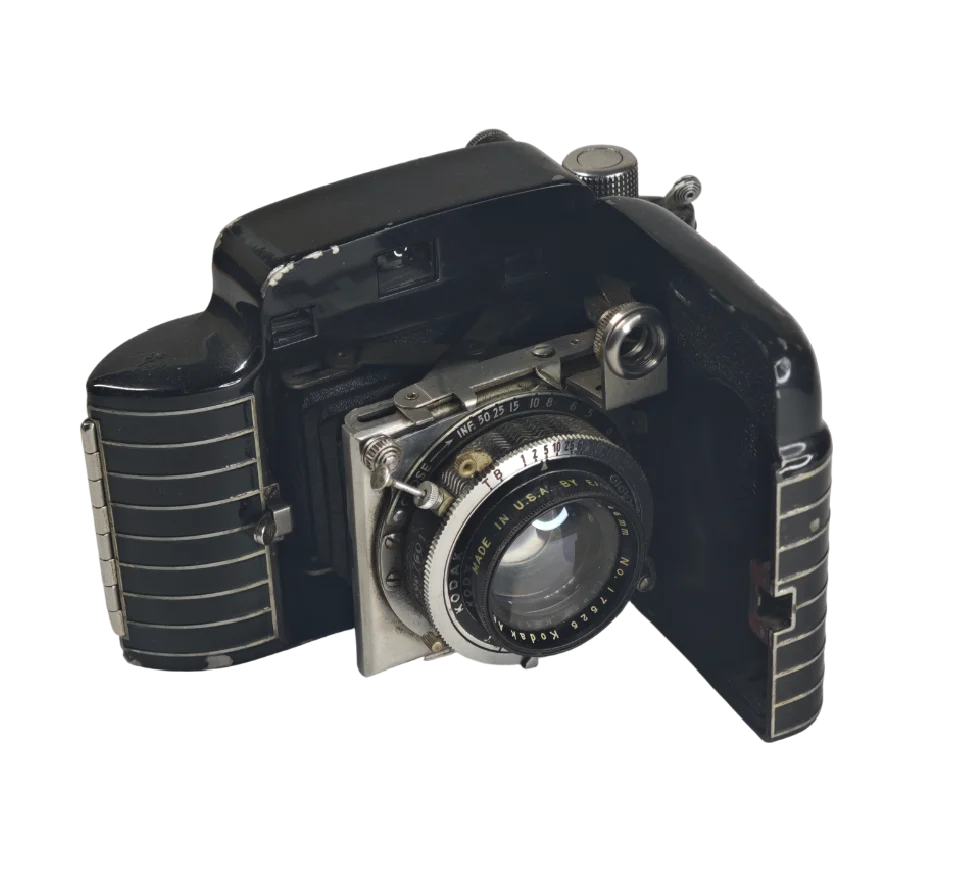
Kodak Bantam Special (1936), diseño Art Déco, en la colección de Pol
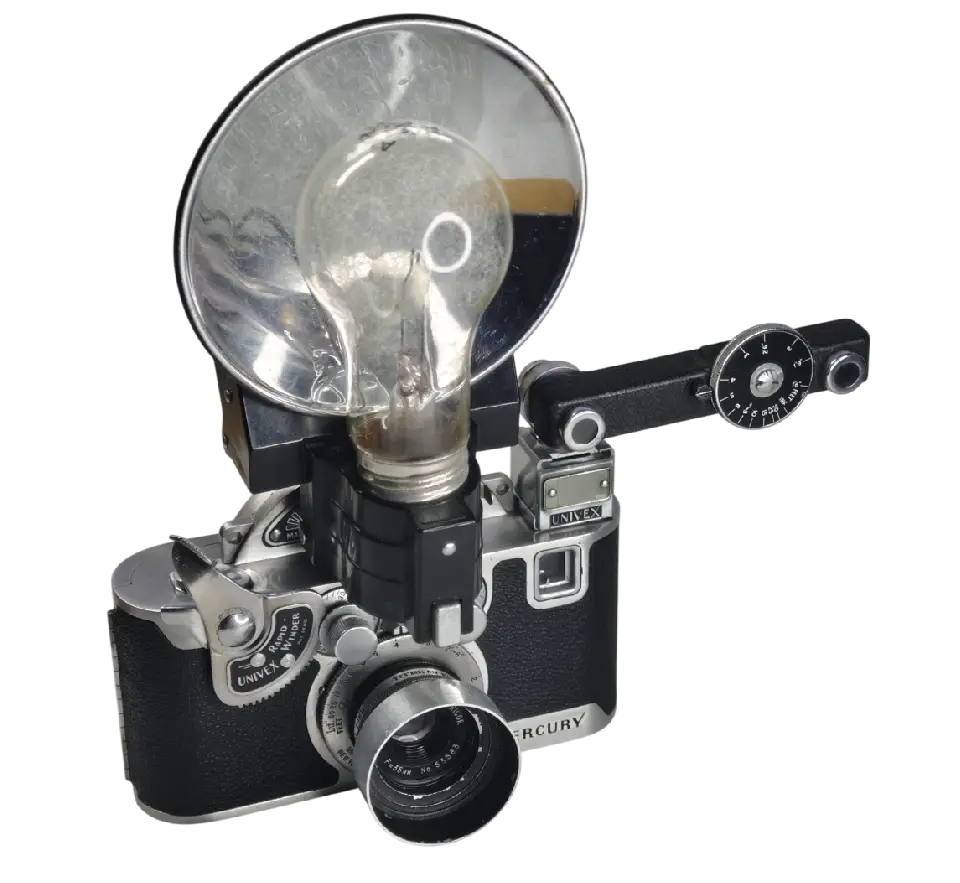
Mercury I, UniveX Mercury Model CC (1938)
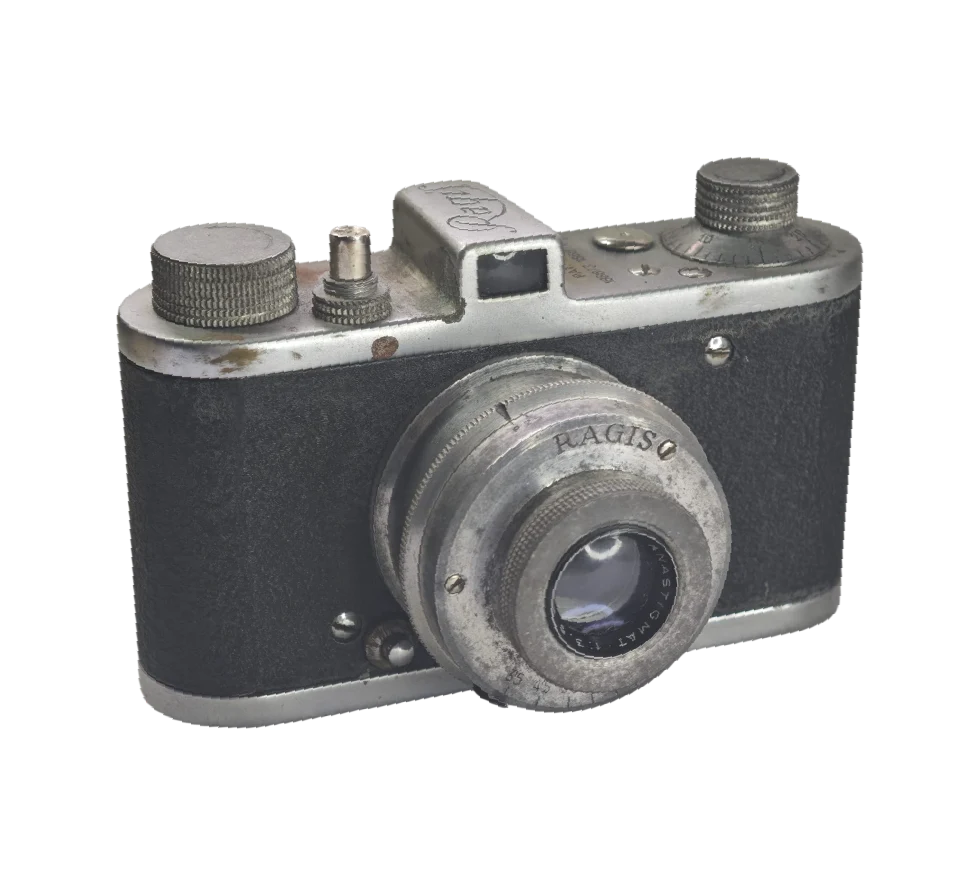
Ragis, La Leica de Barcelona, cámara telemétrica española fabricada por Regis c. 1947
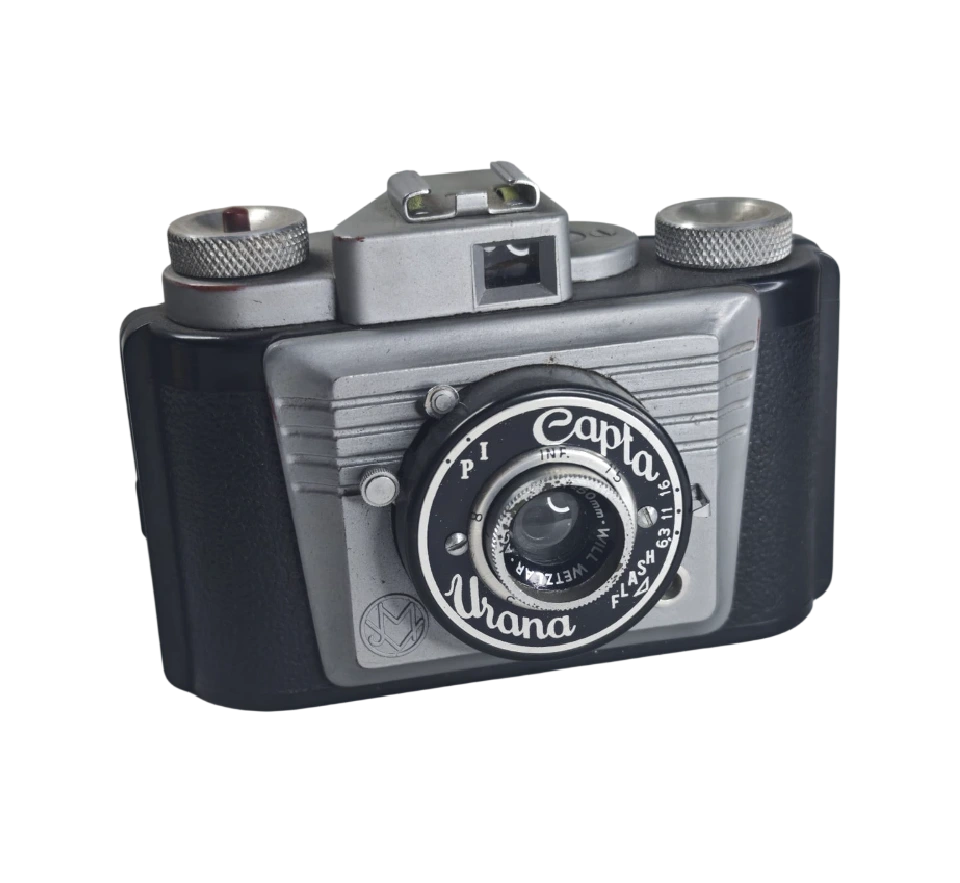
Capta Urana, cámara de baquelita fabricada por Industrias Matutano S.L. en Valencia, años 40-50
It depends heavily on the type. A simple 1970s or 1980s compact runs between 30 and 80 euros. A serviced mechanical SLR, between 100 and 250. A name-brand rangefinder starts around 300, and collector pieces have no ceiling. Be suspicious of any SLR advertised as "like new" for 40 euros: either it has not been tested or something does not work.
Five things, in this order: the optics against the light (fungus, haze, scratches), the shutter at every speed (especially the slow ones, which stick), the light seals (if they have turned to tar, light gets in), the body (cracked bakelite, screws that are not original) and whether the lens and caps are the right ones for that model.
To start with, mechanical. It does not depend on batteries that are no longer made or on electronics that degrade, and when it fails it can be repaired. An electronic camera from the 1980s may have a better meter, but if the circuit dies there is no replacement.
The rule is simple: insist on photographs of the actual unit, not stock images, and on the seller stating explicitly what they have tested and what they have not. If they say nothing about the shutter, they have not tested it. Here every piece is listed with its condition grade and, where possible, with photographs taken using that very camera.
Yes, and more easily than ten years ago. 35 mm is still manufactured, sold in camera shops and online, and developed by any city lab. What has gone up is the price: budget around 10 to 15 euros for a roll plus developing.
The pieces that leave the collection are published in the shop, with their graded condition and free shipping within Spain.
The collection is not for sale, but some pieces are. They are published with their history, their graded condition and photographs taken with that very camera.
Free shipping within Spain · 14 days to return it
